


KRESS MARKET
Where History Finds Its Future: The Rebirth of an El Paso Landmark
For generations, its doors witnessed the everyday life of El Paso. Now, the historic Kress Building begins a new chapter as a culinary, commercial and social destination. Behind its transformation lies a multimillion-dollar investment, a commitment to local entrepreneurs and a vision to bring renewed energy to the heart of Downtown El Paso.
Some buildings simply occupy space in a city. Others become part of its collective memory.
By Ana Paula Kiyama
For generations, the historic Kress Building has been much more than a department store. It was a meeting place, a space of discovery and an enduring part of everyday life in El Paso. Its hallways hold memories of family shopping trips, afternoon conversations, browsing through merchandise and gathering around a soda fountain in an era when shopping was as much about the experience as it was about the purchase. Now, nearly three decades after closing its doors as a department store, the building is welcoming the public once again.
Its new identity is Kress Market, a food hall and entertainment destination designed to connect the city’s architectural heritage with a new generation of experiences, businesses and opportunities.
Opening on November 25, 2026, the project marks a new chapter for one of Downtown El Paso’s most recognizable landmarks. Yet its significance extends far beyond the arrival of a new dining destination. It represents an investment in historic preservation, local entrepreneurship and the economic revitalization of the downtown district.
A Legacy That Began in 1907
The Kress story in El Paso dates back to 1907, when S.H. Kress & Co., founded by Samuel Henry Kress, established its first store in the city. The retail chain became widely known for offering affordable everyday merchandise, making its stores familiar gathering places in communities across the United States.
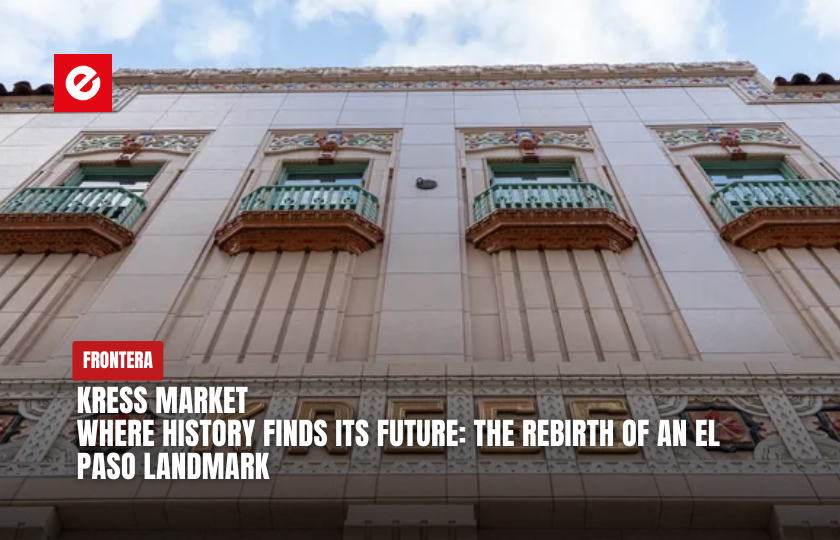
The present Kress Building was inaugurated in 1938. Its Art Deco architecture, ornamental details and distinctive design quickly made it a recognizable feature of Downtown El Paso.
Designed by architect Edward F. Sibbert, the building reflects the architectural identity associated with Kress department stores, incorporating decorative influences that give it a character all its own. But its significance was never limited to its facade.
Kress was a place where commerce and community shared the same space. Its counters, staircases, resting areas and soda fountain were part of a shopping experience that extended beyond purchasing goods.
The store closed in 1997. For years, the building remained disconnected from the commercial activity that had once made it an essential part of downtown life. Today, its restoration addresses an important question facing cities across the country: How can historic buildings be given a new purpose without losing the identity that makes them special?
Kress Market offers its answer: preserve the spirit of the past while allowing the building to become part of the community’s present and future.
An Investment Vision for Downtown
Behind the transformation is Franklin Mountain Investments (FMI), the company associated with El Paso businessman Paul L. Foster, who acquired the building in 2018.
The redevelopment is part of a broader investment vision for Downtown El Paso, one that brings together historic preservation, real estate development and the creation of new commercial and hospitality destinations.
Construction officially began in April 2023, launching an extensive restoration process that required balancing the needs of a historic structure with the operational demands of a contemporary food hall and hospitality destination.
The investment has been reported at approximately $20 million, while the economic development agreement established with the City of El Paso included a minimum private investment requirement of $18.4 million and potential municipal incentives of up to $2.049 million.
This is more than an architectural renovation. It is a commercial and historic preservation initiative intended to reactivate a landmark that had remained outside the city’s daily commercial life for years.
William Kell, Chief Operating Officer of Franklin Mountain Investments, and Robert Monarez, Senior Vice President of Food and Beverage, are among the key figures associated with the project’s development and execution.
The broader ambition is for Kress to become more than an isolated destination. It is envisioned as part of a larger strategy to strengthen downtown’s appeal and its connection to other hospitality, retail and entertainment destinations.
Eight Culinary Concepts. One Shared Vision: Celebrating Local Flavor.
At the heart of Kress Market is its culinary experience. The project brings together eight restaurant concepts representing the diversity, creativity and entrepreneurial spirit of El Paso’s food scene. Rather than relying exclusively on national chains or standardized commercial formulas, the food hall incorporates established regional operators and local concepts, giving them a platform to expand their reach and connect with new audiences.
The announced lineup includes:
- Yamaguchi Ramen. Bringing Japanese-inspired comfort food to the food hall, Yamaguchi features specialties such as Hakata Tonkotsu, Spicy Tonkotsu and Chicken Shio. The concept is expanding its presence with this third location.
- Ay Cocula. Daniel Serrato brings his Mexican food concept, featuring steak and al pastor tacos, along with new offerings such as ribeye tacos.
- Chicken Coop. Created by the owners of The Shack Wings & Brew, this concept focuses on Nashville-style chicken sandwiches and wraps.
- Desert Oak Barbecue. Richard Funk brings Central Texas-style barbecue, celebrating slow cooking and the flavors that define this culinary tradition.
- Ceviche Bar. Arturo Cano introduces a seafood-focused concept featuring customizable ceviche with shrimp, octopus, crab and scallops.
- Artesana Bakery. Tomas Valles expands his bakery with a second location, offering specialty conchas, cheesecakes and cookies.
- El Trópico. Lucio Barragán and Gabriela Yáñez bring handcrafted ice cream made with natural flavors, alongside beverages and snacks.
- Stoney’s Craft Pizza. A new artisan pizza concept developed by the team behind The Shack Slice & Brew.
The diversity of the lineup reflects an interesting business model: bringing different culinary specialties together under one roof while allowing each operator to maintain its own identity.
For participating businesses, joining a destination with a strategic location and a recognizable architectural identity creates opportunities for greater visibility, customer traffic and expansion. For visitors, it means discovering a variety of flavors and local businesses in a single destination.
The Alligator Bar: A Taste of El Paso History
One of the most distinctive elements of Kress Market is the Alligator Bar, a concept inspired by one of El Paso’s most memorable local stories: the alligators once housed at nearby San Jacinto Plaza.
For decades, the plaza was known for its alligator pond, an unusual urban attraction that became part of the childhood memories of generations of El Paso residents. The bar’s name brings that piece of local history into the contemporary experience of Kress.
The project also incorporates nostalgic elements associated with the original department store, including a soda fountain and references to the traditional American diner. The intention is for nostalgia to become more than a decorative theme. It is woven into the way visitors experience the space.
That connection between memory and modern hospitality is one of the project’s most compelling characteristics: turning local history into something people can experience today.
More Than a Food Hall: A New Place to Gather
Kress Market’s vision extends beyond its restaurants. The broader development includes plans for entertainment, gatherings and hospitality, with additional spaces intended for events, sports viewing and other commercial experiences on the upper floors.
The larger development vision also includes a proposed underground connection to Plaza Hotel Pioneer Park, another historic property associated with the revitalization of Downtown El Paso. Together, these elements reflect an ambition to create a network of destinations that encourages residents and visitors to spend more time downtown.
It is important to recognize that the November 25 opening marks the beginning of this new chapter, while certain entertainment and upper-floor components remain part of the project’s broader development plans.
Historic Preservation as an Economic Strategy
The transformation of Kress illustrates an increasingly relevant approach to urban development: architectural heritage can become an economic asset when it is integrated into projects capable of generating activity, investment and new experiences.
Instead of replacing a historic structure with an entirely new development, the project gives an existing landmark a contemporary commercial purpose. Its potential impact extends across multiple industries.
Restaurants, bars, retail businesses and entertainment venues require employees in food preparation, management, hospitality, customer service, maintenance and event operations. They also create opportunities for suppliers, producers and businesses connected to the broader service economy.
Beyond direct employment, a destination of this scale can attract visitors and strengthen economic activity among surrounding businesses. For Downtown El Paso, the restoration of a landmark of this importance means adding a destination capable of connecting gastronomy, tourism, retail and urban life. For the greater border region, the project carries another dimension. El Paso and Ciudad Juárez share economic, cultural and social connections that make downtown an important destination for visitors from both sides of the international border.
New culinary concepts and gathering spaces can create additional reasons to cross, explore the downtown district and discover an experience that combines local identity with contemporary hospitality.
A City’s Future Is Also Built by Restoring Its Past
At a time when cities compete to attract investment, talent, visitors and new businesses, projects like Kress Market offer a different perspective on growth. Not every development needs to begin from scratch. Sometimes, the most meaningful opportunities are found in places that already have history, recognition and a place in the collective memory.
Nearly 90 years after the opening of the building that houses it, Kress is welcoming a new generation through its doors with a different identity and renewed purpose. The department store that once brought families together around its counters is becoming a gathering place for culinary entrepreneurs, visitors, residents and new generations.
Its past tells a story of commerce. Its present reflects investment and entrepreneurship. Its future will depend on its ability to become a vibrant, sustainable destination that remains genuinely connected to the community. Because restoring a building is about more than repairing walls, preserving architectural details or returning a landmark to its former beauty. It is about giving it a reason to matter again.
And in the heart of Downtown El Paso, Kress Market begins its next chapter precisely there: where a city’s memories meet the possibilities of its future.

